


What is Python Programming?
Python stands as the backbone of Artificial Intelligence (AI) and Machine Learning (ML) development. Its clean syntax, readability, and rich ecosystem of libraries allow developers to work efficiently across all stages from data collection and preprocessing to model training and deployment. With its flexibility and extensive community support, Python has become the global standard for AI and ML professionals, enabling innovation at both research and industrial scales.
Python’s dominance in AI and ML stems from its balance of simplicity and power. It allows both beginners and experts to implement complex ideas with minimal code. The language’s design philosophy emphasizes readability and rapid prototyping, making it ideal for experimentation and production.
Python’s dominance in AI and ML stems from its balance of simplicity and power. It allows both beginners and experts to implement complex ideas with minimal code. The language’s design philosophy emphasizes readability and rapid prototyping, making it ideal for experimentation and production.
Key Components of Python for AI/ML
1. Essential Python Libraries
- NumPy: For efficient numerical and matrix operations.
- Pandas: For handling, cleaning, and transforming structured data.
- Matplotlib & Seaborn: For data visualization and trend analysis.
- Scikit-learn: For traditional ML algorithms like regression, classification, and clustering.
- TensorFlow & PyTorch: For developing and training deep neural networks.
- NLTK & spaCy: For language processing and text analytics.

2. Data Preprocessing

- Cleaning and managing missing or inconsistent data
- Performing feature selection and transformation
- Standardizing and normalizing datasets
- Creating train-test splits and cross-validation
- Managing large or imbalanced datasets efficiently
3. Model Development
- Built-in ML algorithms and reusable templates
- Hyperparameter optimization and model validation
- Easy-to-use performance metrics
- Model serialization, saving, and deployment tools

4. OOP in ML
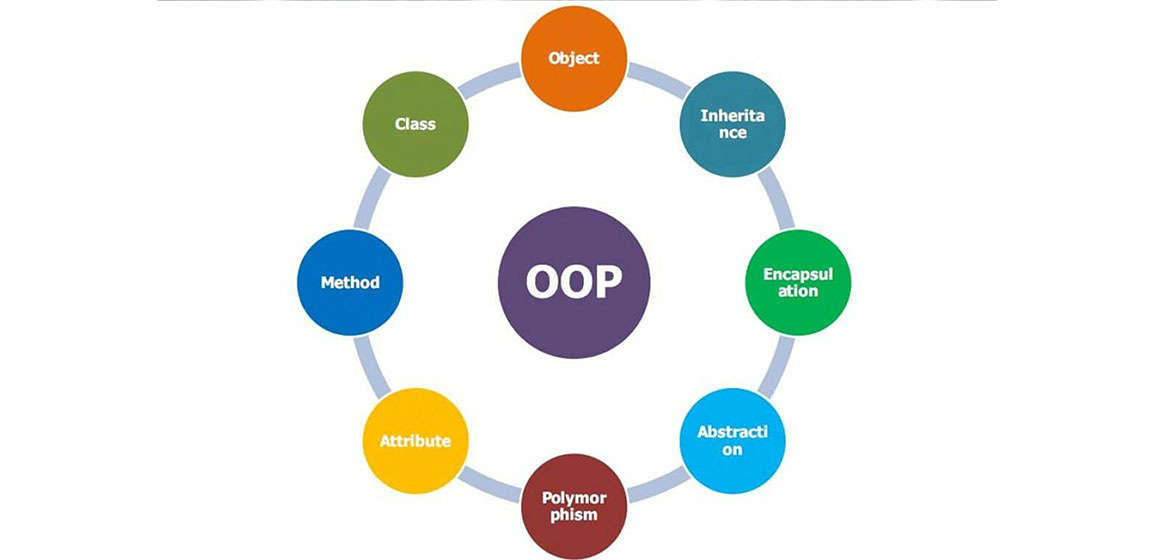
- Reusable preprocessing and training pipelines
- Custom model classes and evaluation methods
- Scalable, maintainable code structures
Why Python Matters for AI/ML
Importance and Usefulness
Industry Standard
Used by over 70% of data scientists and ML engineers globally.
Rich Ecosystem
Thousands of specialized libraries speed up innovation.
Community Support
Extensive documentation and peer help ensure smooth learning.
Rapid Prototyping
Enables fast development cycles and experimentation.
Scalability
Suitable for both research prototypes and large-scale deployments.
Integration Power
Works with databases, APIs, and cloud environments.
Research to Production
The same tools can be used across the entire AI lifecycle.